Saturday, January 17, 2009


More...

Complete Original Article
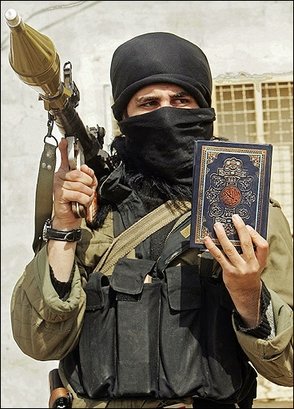
What A Joke!


Barack Obama preens, and garners this sort of headline: "Sources: Obama ready to ban harsh interrogations":

President-elect Barack Obama is preparing to prohibit the use of waterboarding and other harsh interrogation techniques by ordering the CIA to follow military rules for questioning prisoners, according to two U.S. officials familiar with drafts of the plans.

Of course, there is one very big catch:

However, Obama's changes may not be absolute. His advisers are considering adding a classified loophole to the rules that could allow the CIA to use some interrogation methods not specifically authorized by the Pentagon, the officials said. ...

For Obama, who repeatedly insisted during the 2008 presidential campaign and the transition period that "America doesn't torture," a classified loophole would allow him to follow through on his promise to end harsh interrogations while retaining a full range of presidential options in conducting the war against terrorism.

The proposed loophole, which could come in the form of a classified annex to the manual, is designed to satisfy intelligence experts who fear that an outright ban of so-called enhanced interrogation techniques would limit the government in obtaining threat information that could save American lives. It would also preserve Obama's flexibility to authorize any interrogation tactics he might deem necessary for national security.

Now, that's "change you can believe in!" Obama's hypocrisy on this issue is identical to John McCain's. McCain denounced the Bush administration for "torturing" detainees. I disagree. I don't think waterboarding is torture; on the contrary, I think it is the ideal way to interrogate terrorists because it is quick and effective and because it does not actually harm them. I see it as a humane alternative to much worse techniques. But that's not the point, at the moment.

When McCain was asked what he would do in the "ticking time bomb" situation, where we have in our custody a terrorist with knowledge of plots in progress that may kill Americans, his response was that in that case, he would expect the President to do whatever was necessary. That is exactly the position Obama is now taking: we won't torture detainees. Unless, of course, we need to!

All of this might make some kind of sense if you assume that the Bush administration had a nasty habit of hauling terrorists (or Democrats, maybe) off the street for no particular reason, and waterboarding them. In fact, though, a total of three top-ranking al Qaeda terrorists were waterboarded, in the period shortly after September 11 when there was good reason to believe that they had knowledge of plots that were still active. This was exactly the "ticking time bomb" scenario where McCain has explicitly admitted, and Obama now implicitly agrees, "torture," or harsh interrogation tactics anyway, may be necessary.

In short, Obama's posturing is meaningless and politically motivated. His policy will not be any different from President Bush's; he is just trying to score cheap political points. Obama is no dummy, and is acutely aware of the Bush administration's extraordinary record of keeping us safe from terrorist attacks over the last seven years. He knows that his approval rating will sink like a stone if he exposes Americans to mass murder because of a foolish consideration for the comfort of terrorists. If and when the time comes, he will act exactly as George Bush did.

More...

Complete Original Article


Canal ice helps Dutch rediscover national identity


NIEUWERKERK AAN DEN IJSSEL, Netherlands: For the first time in 12 years, the Netherlands' canals froze this month, bringing the Dutch, who like their tulips in neat rows, a heady mix of pandemonium and euphoria.

Hundreds of thousands of skaters, their cheeks as red as apples in the freezing temperatures, took to the ice, and hospital wards were filled with dozens of people with fractured arms, sprained ankles and broken legs.

More...

Complete Original Article


Friday, January 16, 2009


More...

Complete Original Article

Pretty Talk and Ugly Realities


No phrase represents more of a triumph of hope over experience than the phrase "Middle East peace process." A close second might be the once-fashionable notion that Israel should "trade land for peace."

Since everybody seems to be criticizing Israel for its military response to the rockets being fired into their country from the Gaza strip, let me add my criticisms as well. The Israelis traded land for peace, but they have never gotten the peace, so they should take back the land.

Maybe a couple of generations of Palestinians in Gaza living in peace under Israeli occupation and a couple of generations of the occupation troops squelching the terrorists— "militants" for those of you who are squeamish— would set up conditions where the Palestinians would be free to vote on whether they would like to remain occupied or to have their own state— minus terrorists and their rockets.

Casualty totals alone should be enough to show that the Palestinian people are the biggest losers from the current situation, where the terrorists among them, firing rockets into Israel, can bring devastating retaliatory strikes.

Why don't the Palestinians vote for some representatives who would make a lasting peace with Israel? Because any such candidates would be killed by the terrorists long before election day, so nobody volunteers for that dangerous role.

We don't know what the Palestinians really want— and won't know as long as they are ruled by Hamas, Hezbollah and the like.

Whatever the benefits of peace for the Palestinian population, what are the terrorists going to do in peacetime? Become librarians and furniture salesmen?

So-called "world opinion" has been a largely negative factor in this situation. Nothing is easier than for people living in peace and safety in Paris or Rome to call for a "cease fire" after the Israelis retaliate against people who are firing rockets into their country.

The time to cease fire was before the rockets were fired.

What do calls for "cease fire" and "negotiations" do? They lower the price of launching attacks.


YesNo

YesNo

YesNo


This is true not only in the Middle East but in other parts of the world as well.

During the Vietnam war, when American clergymen were crying out "Stop the bombing!" they paid little attention to the fact that bombing pauses made it easier for North Vietnam to move more ammunition into South Vietnam to kill both South Vietnamese and Americans.

After Argentina invaded the Falkland Islands, if British Prime Minister Margaret Thatcher had heeded calls for a "cease fire," that would have simply lowered the price to be paid by the Argentine government for their invasion.

Go back a hundred years— before there was a United Nations and before "world opinion" was taken into account.

An Argentine invasion of the Falkland Islands at that time would have risked not only a British counter-attack to retake the islands but also British attacks on Argentina itself.

Anywhere in the world, attacks such as those on Israel today would not only have risked retaliation but invasion and annihilation of the government that launched those attacks.

Today, so-called "world opinion" not only limits the price to be paid for aggression or terrorism, it has even led to the self-indulgence of third parties talking pretty talk about limiting the response of those who are attacked to what is "proportionate."

By this reasoning, we should not have declared war on Japan for bombing Pearl Harbor. We should have gone over to Japan, bombed one of their harbors— and let it go at that.

Does anyone imagine that this would have led to Japan's becoming as peaceful today as it has become after Hiroshima and Nagasaki?

Or is the real agenda to engage in moral preening from a safe distance and at somebody else's expense?

Those who think "negotiations" are a magic answer seem not to understand that when A wants to annihilate B, this is not an "issue" that can be resolved amicably around a conference table.


More...

Complete Original Article


Failing Upwards

Michael Jordan said it best:

I’ve missed more than 9000 shots in my career. I’ve lost almost 300 games. 26 times, I’ve been trusted to take the game winning shot and missed. I’ve failed over and over and over again in my life. And that is why I succeed.

Eric Holder said it a little worse:

My decisions were not always perfect. I made mistakes. I hope that enough of my decisions were correct. But with the benefit of hindsight, I can see my errors clearly and I can tell you how I have learned from them.

The former Clinton-administration Justice-department official up for Attorney General has a political “rap sheet” as long as his arm. The involvement in Bill Clinton’s shady last-minute pardons alone would be enough to disqualify most people. Indeed, Holder himself won’t defend his actions — rather, he admits guilt and apologizes — but is not above trying to use them to his advantage. He makes an interesting argument — “I’ve screwed up plenty, so you don’t have to worry about me making those mistakes again because I learned from these bad experiences!”

On the surface, a bold move. But, really, what other choice does he have?

A similar thing seems to be going on with Obama’s nominated Treasury Secretary, Timothy Geithner. Here’s a guy who will be in charge of the IRS, and even he can’t keep his own taxes in order. Or keep up with his employees’ immigration status. But he’s highly qualified, because he headed up the New York Federal Reserve Bank… and “supervised” the greatest financial meltdown.

It isn’t just Obama’s nominees either, but other Democrats. In the House of Representatives, the Ways and Means Committee is headed up by Charlie Rangel. The head of the main tax-writing committee is apparently incapable of understanding his own financial situations — the number of rent-controlled apartments in New York he can hold, whether he can claim a “homestead” tax deduction for a DC-area house and still legally represent New York in Congress, whether he can use his Congressional parking spot in the garage to store his classic Mercedes, whether he has to declare rental income on a property in the Caribbean . . .

By today’s standard, Geithner, Holder, and Rangel should be found wanting, and cast aside for their imperfections.

More...

Complete Original Article


More...

Complete Original Article

A Firsthand Look at the Real Guantanamo


The truth about the facility bears little resemblance to the stereotypes peddled by media and politicians.

I recently visited the detention facilities at the U.S. naval base at Guantanamo Bay, Cuba, and was dismayed at what I saw. The place was nothing like what I expected, and I was struck by how little we Americans actually know about these facilities and the conduct of our personnel there. With every new interview and every new area walk-through I hoped to find some validation of the certainties I brought with me from the hundreds of articles, documentaries, and speeches presented to the American people by our intellectual superiors.

More...

Complete Original Article


More...

Complete Original Article

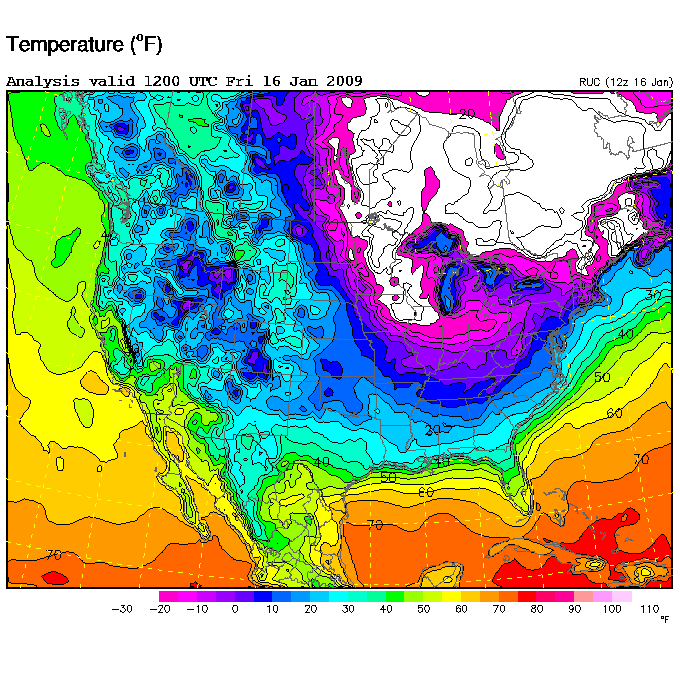
Coldest Snap in Years Blankets Midwest

CHICAGO (Jan. 16) - Bundle up. Temperatures in the upper Midwest were expected to the coldest in years Friday as chilly Arctic air spilled south from Canada.
The bone-numbing blast of arctic air that was also chilling the Northeast had claimed at least three lives and contributed to dozens of traffic accidents as vehicles slipped and slid on icy roads.


More...Numerous schools in Michigan, Iowa, Ohio and Illinois canceled classes for Friday as officials feared it would be dangerous for students to walk to school or wait for buses.
"They're waiting 30 minutes at a bus stop; there's the fear of frostbite and hypothermia," said Champaign Assistant Superintendent Beth Shepperd. "We also have more children walking to school without adequate outerwear."
At 5:30 a.m. Friday it was minus 10 in Cleveland, minus 6 in Detroit and minus 11 in Chicago.

The National Weather Service predicted the subzero temperatures would persist into the weekend. Wind chill warnings were in effect over much of five states advising the cold and strong winds could lead to hypothermia, frost bite and death.
"When you have these cold temperatures, it doesn't take very long for skin to freeze," National Weather Service meteorologist Rod Donavon said.
Iowa City hospitals had treated three people for cold-related injuries by midday Thursday, said University of Iowa Hospitals spokesman Tom Moore. Overnight temperatures there reached minus 24 degrees.
Thursday morning's minus 11 reading — without wind chill — at O'Hare International Airport was the coldest daytime temperature recorded there since 1996, when it got down to minus 14.
The weather system descended from a large, dry air mass that hovered over Alaska and northern Canada for a couple of weeks before moving south. The frostiest conditions were to the north, but the cold stretched as far south as Mississippi, Alabama, Georgia and South Carolina.
In downtown Des Moines, where temperatures didn't top zero on Thursday, the Brenton Skating Plaza closed due to cold weather for the first time since it opened two years ago.
"The reason that we did is with the wind chill factor and how quickly frostbite sets in, and with us being right on the river," general manager Robbin McClelland said. "We want everybody to stay safe."
In Omaha, Nebraska, garbage truck driver James Finley was wearing several layers of clothes to protect himself freezing cold that with wind chill registered minus 15 on Thursday.
"This is the worst in my 13 years," Finley said while taking a coffee break inside his truck.
In St. Louis, Ray Redlich, assistant director of New Life Evangelistic Center, went on a "winter patrol" with others Wednesday night and found about 20 people gathered around a fire in an abandoned five-story warehouse near the Mississippi River. Tents were pitched inside.
At another spot, the team found two men warming themselves over a fire in a barrel, near where semi drivers drop off trailers.
"We find a range of people — survivalists, people along the river," Redlich said. "One Vietnam veteran has a little house built down by the river. He's OK.
"Others are mentally ill, and often ill-clad. They're just out there and really need to be rescued and might die if not brought in."
Officials say at least three people have apparently froze to death overnight.
In Illinois, a 37-year-old man was found dead Thursday in the snow outside his home in Normal — without a coat, hat or gloves. Preliminary tests indicated he was intoxicated.
A 50-year-old man in southeastern Michigan appeared to have frozen to death after being locked out of his duplex overnight.
Earlier in the week, a Wisconsin man froze to death after he apparently went sleepwalking outdoors in bare feet. Authorities suspect he had also been drinking before his body was found Tuesday.

Complete Original Article

Hudson River hero is ex-Air Force fighter pilot

The pilot who guided a crippled US Airways jetliner safely into the Hudson River _ saving all 155 people aboard _ became an instant hero Thursday, with accolades from the mayor and governor and a fan club online.

The pilot of Flight 1549 was Chesley B. "Sully" Sullenberger III, 57, of Danville, Calif., an official familiar with the accident told The Associated Press. Sullenberger is a former fighter pilot who runs a safety consulting firm in addition to flying commercial aircraft.More...

Sullenberger, who has flown for US Airways since 1980, flew F-4 fighter jets with the Air Force in the 1970s. He then served on a board that investigated aircraft accidents and participated later in several National Transportation Safety Board investigations.

Sullenberger had been studying the psychology of keeping airline crews functioning even in the face of crisis, said Robert Bea, a civil engineer who co-founded UC Berkeley's Center for Catastrophic Risk Management.

Bea said he could think of few pilots as well-situated to bring the plane down safely than Sullenberger.

"When a plane is getting ready to crash with a lot of people who trust you, it is a test.. Sulley proved the end of the road for that test. He had studied it, he had rehearsed it, he had taken it to his heart."

Sullenberger is president of Safety Reliability Methods, a California firm that uses "the ultra-safe world of commercial aviation" as a basis for safety consulting in other fields, according to the firm's Web site.

Sullenberger's mailbox at the firm was full on Thursday. A group of fans sprang up on Facebook within hours of the emergency landing.

"OMG, I am terrified of flying but I would be happy to be a passenger on one of your aircraft!!" Melanie Wills in Bristol wrote on the wall of "Fans of Sully Sullenberger." "You have saved a lot of peoples lives and are a true hero!!"

The pilot "did a masterful job of landing the plane in the river and then making sure that everybody got out," Mayor Michael Bloomberg said. "He walked the plane twice after everybody else was off, and tried to verify that there was nobody else on board, and he assures us there was not."

"He was the last one up the aisle and he made sure that there was nobody behind him."

Gov. David Paterson pronounced it a "miracle on the Hudson."

A woman who answered the phone at Sullenberger's home in Danville hung up on a reporter who asked to speak with the family.

Candace Anderson, a member of the Danville town council who lives a few blocks from Sullenberger, said it was an amazing story and she was proud to live in the same town as the pilot.

"You look at his training, you look at his experience. It was just the right pilot at the right time in charge of that plane that saved so many lives," Anderson said. "He is a man who is calm, cool, collected, just as he was today."

Sullenberger's co-pilot was Jeff Skiles, 49, of Oregon, Wis., a 23-year US Airways veteran.

"He was OK," said his wife, Barbara. "He was relieved that everybody got off."


Complete Original Article


Big loss at Bank of America as feds give it $20 billion more


WASHINGTON — With a new round of turmoil gripping the financial markets, the Bush administration late Thursday night rushed $20 billion in emergency funding for Bank of America.

Just months ago, Bank of America, based in Charlotte, N.C., appeared to emerge as the nation's top bank after it stepped in on Sept. 15 to purchase investment bank Merrill Lynch. After Merrill's fourth-quarter results proved worse than expected, however, the acquisition was in peril and investors have fled Bank of America in droves.

Friday morning, Bank of America Corp. announced a fourth-quarter loss of $2.39 billion, or 48 cents per share, as it suffered rising loan losses, soured investments and trading losses. More...

Bank of America's stock lost 40 percent of its value during the past 10 days — shares closed on Thursday in single digits for the first time in 18 years — and the taxpayer money will be used to ameliorate the losses from its acquisition of Merrill Lynch. Chief Executive Ken Lewis called it "deal of a lifetime" when it was announced.

People familiar with the unfolding events, requesting anonymity to speak freely, said Treasury Secretary Henry Paulson and Federal Reserve Chairman Ben Bernanke, with the knowledge of President-elect Barack Obama's transition team, pressured the bank to stick to its purchase of Merrill Lynch.

In addition to the $20 billion Bank of America will receive from October's bailout fund, the Federal Reserve and Treasury Department also will provide a backstop of $118 billion for its assets, which include mostly securities whose collateral are commercial or residential real-estate loans. Most of these troubled assets were assumed by Bank of America in its acquisition of Merrill Lynch.

The bank would absorb the first losses, followed by the Treasury Department and Federal Deposit Insurance Corp. The Fed could be on the hook for a large chunk of any further losses. As part of the deal, Bank of America agreed to tougher compensation restrictions and must implement a mortgage-loan modification program. Both are conditions that congressional Democrats have been demanding in exchange for any new bailout money.

The late-night rescue capped a momentous day in Washington. The Senate on Thursday authorized President Bush, on Obama's behalf, to seek the second $350 billion in Wall Street rescue money. In a letter to lawmakers, Obama's top economic adviser, Lawrence Summers, pledged far greater accounting of how the remaining funds are spent.

The funds rushed to Bank of America come from bailout money that had been promised, but not yet given, to other institutions by the Bush administration. It will fall to the Obama administration to direct new funds to these banks, which saw their promised capital injections usurped by the Bank of America crisis.

Bank of America expects to shed as many as 35,000 jobs nationwide as the banking sector crisis deepens. One top-level executive, who'd been handed a pink slip Thursday, told McClatchy that morale is at rock bottom.

"It's terrible," said the executive, who asked that his name not be used because details of his departure were still being worked out. "Everyone is worried, from the lowest employee to the highest."

Bank of America and Merrill Lynch already had received $25 billion in Wall Street bailout money last year, and the new round of aid is sure to anger the public and lawmakers in Congress. They're angry that the money injected into the banks came without strings attached and that there are few measures to gauge whether the banks are actually lending the money as was intended.

Despite the fact that the Bush administration gave almost $350 billion to banks and other financial institutions, the financial sector continues to be rocked by uncertainty. Citigroup, another of the nation's largest banks, said this week it expects to shrink by a third as it lops off parts of its business and resizes itself for a much weaker economy. It was rescued by the federal government in November.

Complete Original Article

Exit Bush, Shoes Flying


WASHINGTON -- Except for Richard Nixon, no president since Harry Truman leaves office more unloved than George W. Bush. Truman's rehabilitation took decades. Bush's will come sooner. Indeed, it has already begun. The chief revisionist? Barack Obama.

Vindication is being expressed not in words but in deeds -- the tacit endorsement conveyed by the Obama continuity-we-can-believe-in transition. It's not just the retention of such key figures as Secretary of Defense Bob Gates or Treasury Secretary nominee Timothy Geithner, who, as president of the New York Fed, has been instrumental in guiding the Bush financial rescue over the last year. It's the continuity of policy.

It is the repeated pledge to conduct a withdrawal from Iraq that does not destabilize its new democracy and that, as Vice President-elect Joe Biden said just this week in Baghdad, adheres to the Bush-negotiated status of forces agreement that envisions a U.S. withdrawal over three years, not the 16-month timetable on which Obama campaigned.

It is the great care Obama is taking in not pre-emptively abandoning the anti-terror infrastructure that the Bush administration leaves behind. While still a candidate, Obama voted for the expanded presidential wiretapping (FISA) powers that Bush had fervently pursued. And while Obama opposes waterboarding (already banned, by the way, by Bush's CIA in 2006), he declined George Stephanopoulos' invitation (on ABC's "This Week") to outlaw all interrogation not permitted by the Army Field Manual. Explained Obama: "Dick Cheney's advice was good, which is let's make sure we know everything that's being done," i.e., before throwing out methods simply because Obama campaigned against them.

Obama still disagrees with Cheney's view of the acceptability of some of these techniques. But citing as sage the advice offered by "the most dangerous vice president we've had probably in American history" (according to Joe Biden) -- advice paraphrased by Obama as "we shouldn't be making judgments on the basis of incomplete information or campaign rhetoric" -- is a startlingly early sign of a newly respectful consideration of the Bush-Cheney legacy.

Not from any change of heart. But from simple reality. The beauty of democratic rotations of power is that when the opposition takes office, cheap criticism and calumny will no longer do. The Democrats now own Iraq. They own the war on al-Qaeda. And they own the panoply of anti-terror measures with which the Bush administration kept us safe these last seven years.

Which is why Obama is consciously creating a gulf between what he now dismissively calls "campaign rhetoric" and the policy choices he must now make as president. Accordingly, Newsweek -- Obama acolyte and scourge of everything Bush/Cheney -- has on the eve of the Democratic restoration miraculously discovered the arguments for warrantless wiretaps, enhanced interrogation and detention without trial. Indeed, Newsweek's neck-snapping cover declares, "Why Obama May Soon Find Virtue in Cheney's Vision of Power."

Obama will be loath to throw away the tools that have kept the homeland safe. Just as he will be loath to jeopardize the remarkable turnaround in American fortunes in Iraq.

Obama opposed the war. But the war is all but over. What remains is an Iraq turned from aggressive, hostile power in the heart of the Middle East to an emerging democracy openly allied with the United States. No president would want to be responsible for undoing that success.

In Iraq, Bush rightly took criticism for all that went wrong -- the WMD fiasco, Abu Ghraib, the descent into bloody chaos in 2005-06. Then Bush goes to Baghdad to ratify the ultimate post-surge success of that troubled campaign -- the signing of a strategic partnership between the U.S. and Iraq -- and ends up dodging two size-10 shoes for his pains.

Absorbing that insult was Bush's final service on Iraq. Whatever venom the war generated is concentrated on Bush himself. By having personalized the responsibility for the awfulness of the war, Bush has done his successor a favor. Obama enters office with a strategic success on his hands -- while Bush leaves the scene taking a shoe for his country.

Which is why I suspect Bush showed such equanimity during a private farewell interview at the White House a few weeks ago. He leaves behind the sinews of war, for the creation of which he has been so vilified but which will serve his successor -- and his country -- well over the coming years. The very continuation by Democrats of Bush's policies will be grudging, if silent, acknowledgement of how much he got right.


More...

Complete Original Article

Thursday, January 15, 2009

Iran Wields The Gavel At The UNDP


Truly, I had plans to write this week about something other than the United Nations. But over at Turtle Bay, here they go again.

To chair the 2009 governing board of the U.N.'s flagship agency, the multibillion-dollar globe-girdling United Nations Development Program, dedicated to promoting good governance and ending poverty, the U.N. has now picked--wait for it--the Islamic Republic of Iran.More...

This decision--reached last Friday--has escaped public notice, perhaps because the UNDP has neglected to advertise the news, or maybe because the world is too busy watching in Gaza the latest product of Iran's terrorist development programs in the Middle East.

But handing Iran the gavel of the UNDP executive board ranks right up there with the U.N.'s choice in 2003 of Libya to head the old Human Rights Commission, or Zimbabwe in 2007 to chair the Commission on Sustainable Development.

Except in some ways it's worse. For U.N.-sanctioned Iran, which last fall lost its brazen bid for a seat on the U.N. Security Council, this UNDP chairmanship is the next step in a creeping campaign for diplomatic influence and legitimacy at the U.N. via seats on the boards of the U.N.'s alphabet agencies--from UNICEF, to the United Nations Environment Program, to the World Food Program and beyond.

When I wrote about this pattern in December, Iran had just secured itself a three-year seat on the 36-member UNDP board. Now Tehran has been promoted to running the show.

Still worse, the UNDP is not just any old U.N. agency. It is the U.N.'s lead development agency, the chief coordinator in the field of almost all the others, loaded with money, dispensing high-level advice along with more than $9 billion per year around the globe--some $5 billion of that from its own budget and another $4 billion or so on behalf of other U.N. operations.

Headquartered in New York, across the street from the U.N. Secretariat's landmark domino building, the UNDP is a vast bureaucracy, blanketed in diplomatic immunity, bankrolled both by U.N. member-state contributions and hundreds of opaque public and private trust funds (the U.S., which gives well over $200 million per year, is among the UNDP's top donors).

Boasting a presence in 166 countries, the UNDP moves money, personnel and equipment across borders around the globe with minimal independent oversight. It does not bode well to have this kind of outfit chaired by Iran, with its record of running networks for terror and sanctions-busting nuclear procurement.

Prone to collaborating on "development programs" with some of the world's worst tyrannies, from North Korea to Syria to Zimbabwe to Iran (where it fields a big office), the UNDP has inspired quips in recent years that its initials might better stand for "UN Dictators Program," or that maybe, in the tradition of Oil-for-Food, the agency should be re-named "Dollars for Dictators."

With Iran's arrival at the helm of the UNDP's governing board, will anyone be riding herd at the U.N. to ensure we don't end up with "Moolah for Mullahs"?

That question needs asking at the confirmation hearing scheduled today for President-elect Obama's nominee to the job of U.S. ambassador to the U.N., Susan Rice.

Iran's ascent to the chairmanship of the UNDP's 36-member executive board took place last Friday, over the protests of the U.S., which broke with the U.N. custom of consensus decision-making to call for a vote. Iran won, 22 to four, with five abstentions and several board members apparently absent.

In response to my queries about this, a U.S. delegate to the U.N.'s Economic and Social Council, Ambassador T. Vance McMahan, said in an e-mailed statement: "The U.S. called for a vote on the chairmanship of UNDP because we believe that Iran is not a responsible member of the international community, and should not be given a leadership role at a major UN program, even if the position is a largely ceremonial one."

But this is no purely cosmetic post. The UNDP's own Web site includes an "Information Note," detailing the substantial responsibilities of its executive board, which oversees not only the UNDP, but also the U.N. Population Fund, or UNFPA.

The board is tasked to receive information and give guidance to the heads of these agencies, monitor performance, approve programs, decide on administrative and financial plans and budgets, recommend new initiatives and submit yearly reports to the General Assembly's Economic and Social Council.

In what universe does Iran's oil-based tyranny qualify to chair this board?

Since the 1979 Islamic revolution, Iran's main entrepreneurial growth industry has been terrorism--witness Hamas in Gaza, Hezbollah in Lebanon and a bloody trail of bombings, mayhem, infiltration and subversion, from Beirut to Argentina to today's Iraq.

At home, along with forcibly veiling its women and jailing and torturing its opposition, Iran--according to New York-based Freedom House--"is a world leader in juvenile executions."

Iran's "development" goals include the avowed desire of its president to wipe Israel off the map and Tehran's evident plan to develop the nuclear weapons to do it--even if that means violating five U.N. Security Council resolutions to date and seeking ways around U.N. and U.S. sanctions.

Iran takes up the UNDP gavel at a sensitive time, both for a tumultuous world and for the UNDP itself. At its first regular board session next week--while most eyes are on Obama's inauguration in Washington--the UNDP plans to forge ahead with re-opening its office in North Korea.

That office was shut down in March 2007, as a result of the so-called Cash-for-Kim scandal, which flared up after the U.S. Mission to the U.N. raised persistent questions about UNDP misconduct in Kim Jong Il's North Korea.

It turned out the UNDP's Pyongyang office, in violation of its own rules, had been funneling hard cash to Kim Jong Il's regime, storing counterfeit $100 banknotes in its office safe and, with North Korea then on the UNDP board, was using development funds to buy business class tickets for North Korean officials to attend board meetings in New York.

A report last June from a panel authorized by the UNDP itself finally confirmed--well after the fact--that the UNDP had provided North Korea with scores of dual-use technologies, meaning that equipment shipped in under the U.N. label of "development" could also be turned to military use.

A Senate subcommittee investigation, led by Sens. Norm Coleman and Carl Levin, further discovered, as disclosed in a January 2008 report, that the UNDP in North Korea had transferred funds to North Korean front entities involved in arms and nuclear proliferation networks.

Some of these entities were in Macau. During a trip to the Far East last fall, I dropped by two of the addresses with which, according to the subcommittee's exhibits, the UNDP in Pyongyang had been doing business. One was a basement supermarket, which the clerks said had been in business at that address for years. The other turned out to be a locked apartment in a residential high-rise.

The UNDP now proposes to re-open its North Korea office, following a "roadmap" offering assorted promises of good conduct. That begs the question of who will enforce discipline and oversight, not only for the UNDP's resurrected operations in North Korea, but around the globe.

When Cash-for-Kim first hit the headlines, U.N. Secretary-General Ban Ki-Moon promised a system-wide audit of the U.N., then narrowed that down to an audit of the UNDP in North Korea--in which U.N. auditors never actually got into the country.

It took many rounds of concerted effort by a former ambassador at the U.S. Mission, Mark Wallace, to pry information from the UNDP about its doings in North Korea. It took months of work by Senate investigators to produce further findings. It took all that pressure, plus plenty from the media, to finally squeeze out of the UNDP some of the above information about UNDP doings in North Korea.

Apart from a few lonely holdouts in Congress, outside oversight of the UNDP has all but dried up. Wallace resigned from the U.S. Mission last year.

Coleman, who took the lead on Senate investigations of the U.N., looks doomed to be replaced by left-wing comedian Al Franken. At the U.N., Ban Ki-Moon, in response to Cash-for-Kim, basically backed away and ceded to the UNDP full turf rights to police itself, undermining his own ethics office and betraying a UNDP whistleblower in the process.

The UNDP's current administrator, Kemal Dervis, has announced plans to step down in March. Subject to approval by the General Assembly, it will be up to Ban Ki-Moon to nominate a successor, in consultation with the UNDP board--which has just elected, as its chair, Iran.

What are Barack Obama and Susan Rice planning to do about this?

Claudia Rosett, a journalist-in-residence with the Foundation for Defense of Democracies,writes a weekly column on foreign affairs for Forbes.com.

Complete Original Article


More...

Complete Original Article

Of Judges, By Judges, For Judges


By George Will

WASHINGTON -- Last November, 13,402,566 California voters expressed themselves for or against Proposition 8, which said that their state's Constitution should be amended to define marriage as a relationship between a man and a woman. The voters, confident that they had a right to decide this question by referendum, endorsed Proposition 8 by a margin of 52.3 to 47.7.

Now comes California's attorney general, Jerry Brown -- always a fountain of novel arguments -- with a 111-page brief asking the state Supreme Court to declare the constitutional amendment unconstitutional. He favors same-sex marriages and says the amendment violates Article 1, Section 1 of California's Constitution which enumerates "inalienable rights" to, among other things, liberty, happiness and privacy.

Brown's audacious argument is a viscous soup of natural-law and natural- rights philosophizing, utterly untethered from case law. It is designed to effect a constitutional revolution by establishing an unchallengeable judicial hegemony. He argues that:

The not-really-sovereign people cannot use the constitutionally provided amendment process to define the scope of rights enumerated in the Constitution; California's judiciary, although established by the state's Constitution, has the extra-constitutional right to supplement that enumeration by brooding about natural law, natural justice and natural rights, all arising from some authority somewhere outside the Constitution; the judiciary has the unchallengeable right to say what social policies are entailed by or proscribed by the state Constitution's declaration of rights and other rights discovered by judges.

What is natural justice? Learned and honorable people disagree. Which is why such consensus as can be reached is codified in a constitution. But Brown's reasoning would make California's Constitution subordinate to judges' flights of fancy regarding natural justice. Judges could declare unconstitutional any act of Constitution-revising by the people.

In a brief responding to Brown's, Kenneth Starr -- former federal judge, former U.S. solicitor general, current dean of Pepperdine University Law School -- notes the absurd consequences of the proposition that "the people can never amend the Constitution to overrule judicial interpretations of inalienable rights." Long ago, a California court struck down a Sunday closing law because "it infringes upon the liberty of the citizen, by restraining his right to acquire property." And a court struck down a law against scalping theater tickets because it violated rights "inherent in every natural person." By Brown's reasoning, judges could declare unconstitutional any constitutional amendment revising these judicial judgments.

Passing laws by referenda is an imprudent departure from the core principle of republican government -- representation: The people do not decide issues, they decide who shall decide. But the right of Californians to make laws through the direct democracy of referenda is as firmly established as it is promiscuously exercised.

In 2000, voters passed Proposition 22, enacting a law stipulating that marriage is a heterosexual relationship. Last May, California's Supreme Court struck down the law on the ground that there is no "compelling state interest" in not recognizing same-sex marriages under the constitutional clause guaranteeing "equal protection" of the laws. Opponents of same-sex marriage quickly gathered sufficient signatures to place on the November ballot the amendment to the constitution.

The breadth and depth of California's toleration regarding sexual lifestyles refute the worry that gays are a vulnerable minority menaced by majoritarian tyranny. Proposition 8 merely restored to California law the ancient and nearly universal definition of marriage, a definition resoundingly endorsed by the U.S. Congress (85-14 in the Senate, 342-67 in the House) and written into the laws of 47 other states. California advocates of erasing the right to same-sex domestic partnerships could not even get sufficient signatures to put their measure on the November ballot.

Just eight years ago, Proposition 22 was passed 61.4 to 38.6. The much narrower victory of Proposition 8 suggests that minds are moving toward toleration of same-sex marriage. If advocates of that have the patience required by democratic persuasion, California's ongoing conversation may end as they hope. If, however, the conversation is truncated, as Brown urges, by judicial fiat, the argument will become as embittered as the argument about abortion has been by judicial highhandedness.

Brown's reasoning would establish an unassailable tyranny of a minority -- judges -- over any California majority. Brown, 70, California's former and perhaps future governor, once was a Jesuit seminarian. One American Heritage dictionary definition of "jesuitical" is "given to subtle casuistry"; one of that dictionary's definitions of "casuistry" is "specious or excessively subtle reasoning to rationalize or mislead." These definitions, although unfair to Jesuits, are descriptive of Brown's argument.More...

Complete Original Article

A Geithner Tax Amnesty The 'tax gap' in profile.


Washington is abuzz over Treasury Secretary-designate Timothy Geithner's $34,000 self-employment tax "mistake." The brouhaha has prompted a second delay for Mr. Geithner's confirmation hearing, which was originally scheduled for Friday but will now be put off until after the inauguration.

When he does appear, Senators will want to know how a reputed financial wizard could have overlooked his Self-Employment Tax liability for four years. All the more so because he had signed a document from his employer at the time, the International Monetary Fund, certifying "that I will pay the taxes for which I have received tax allowance payments." Democrats are saying this is no big deal, but if that's true then perhaps they should consider applying their tax absolution a little more broadly.

Some of our readers may recall something called "the tax gap," which is the estimated difference between taxes due under the law and the taxes that the Internal Revenue Service actually collects. In 2007, the IRS estimated that the gap stood at $290 billion a year. And since Democrats took control of Congress, Senators like Max Baucus and Kent Conrad have made a fetish out of closing the gap. Mr. Baucus has browbeaten the IRS over the gap, demanding plans to close it and putting out newsletters decrying it.

In response, the IRS issues regular "fact sheets" to inform taxpayers about such questions as whether your small business is actually a "hobby," and how you can "help yourself by filing past due returns." The IRS also audits taxpayers to check that their deductions are legitimate and that they've included all their 1099 income and so on. The IRS estimates that more than 90% of the gap is the result of honest mistakes or misunderstandings, but it also includes people who didn't report their snow-shoveling income, their eBay sales or even their babysitting money.

But now Mr. Geithner has come along seeking the job of overseeing the IRS, among other duties. And lo, Mr. Geithner is a living embodiment of The Gap.

He's no different from those people -- you know who you are -- who overestimated their charitable contributions or "forgot" about that $500 cash payment they received when it came time to do their taxes. Even after the IRS audited him in 2006, Mr. Geithner paid back taxes only for the two years -- 2003 and 2004 -- for which he had been audited. He did not bother to amend his 2001 and 2002 returns until late last year, when the tax issue came up during the Obama vetting process.

But Mr. Baucus, who once called the tax gap "an affront to all the rest of us who pay our taxes," is not affronted. "This is an honest mistake and it's clear there was no intention not to pay," said the Finance Committee Chairman.

For our part, we are delighted that Mr. Baucus and Democrats are suddenly in such a forgiving tax mood. In addition to being a teaching moment for liberals, perhaps Mr. Geithner's tax snafu can do all of America some good. We'd suggest that Mr. Geithner and Mr. Baucus together set a new standard for the IRS in dealing with people who, like Mr. Geithner, make a boo-boo on their tax returns.

Let's have an amnesty -- with penalties waived, as they were for Mr. Geithner -- for all those Americans who somehow "forgot" to pay their taxes but are now willing to fess up or are audited. If forgiveness is to be the order of the day for the man who may soon be responsible for the IRS, American taxpayers deserve a similar reprieve.More...

Complete Original Article


More...

Complete Original Article

The Minnesota Recount Was Unconstitutional There's still plenty of time for the state to get it right.


By MICHAEL STOKES PAULSEN

You would think people would learn. The recount in the contest between Norm Coleman and Al Franken for a seat in the U.S. Senate isn't just embarrassing. It is unconstitutional.

This is Florida 2000 all over again, but with colder weather. Like that fiasco, Minnesota's muck of a process violates the Equal Protection Clause of the U.S. Constitution. Indeed, the controlling Supreme Court decision is none other than Bush v. Gore.

Remember Florida? Local officials conducting recounts could not decide what counted as a legal vote. Hanging chads? Dimpled chads? Should "undervotes" count (where a machine failed to read an incompletely-punched card)? What about "overvotes" (where voters punched more than one hole)? Different counties used different standards; different precincts within counties were inconsistent.

The Florida Supreme Court intervened and made things worse, ordering a statewide recount of some types of rejected ballots but not others. It specified no standards for what should count as a valid vote, leaving the judgment to each county. And it ordered partial recounts already conducted in some counties (but not others) included in the final tabulation. The result was chaos.More...

By a vote of 7-2, Bush v. Gore (2000) ruled that Florida's recount violated the principle that all votes must be treated uniformly. Applying precedents dating to the 1960s, the Court found that the Equal Protection Clause meant that ballots must be treated so as to give every vote equal weight. A state may not, by "arbitrary and disparate treatment, value one person's vote over that of another." Florida's lack of standards produced "unequal evaluation of ballots in several respects." The state's supreme court "ratified this uneven treatment" and created more of its own, and was unconstitutional.

Bush v. Gore is rightly regarded as controversial -- but not because of its holding regarding the Equal Protection Clause, which commanded broad agreement among the justices. The controversy arose because of the remedy the Court chose for Florida's violation, which was to end the recount entirely. The majority thought that time was up under Florida law requiring that its results be submitted in time to be included in the Electoral College count. That aspect of Bush v. Gore commanded only five votes. Two justices thought Florida should get more time and another chance.

The problem with the remedy was that it arguably violated the same principle that led the Court to invalidate the recount: the need to treat all votes equally. It had the practical effect of awarding the election to Bush (though subsequent media counts confirmed that Bush won anyway, under any uniform standard). This has led to enduring partisan criticism of the case, some fair and some unfair.

But no matter: Bush v. Gore is the law of the land. On the question of how the Equal Protection Clause applies to state recounts, the ruling, which reflected a 7-2 majority, controls.

Minnesota is Bush v. Gore reloaded. The details differ, but not in terms of arbitrariness, lack of uniform standards, inconsistency in how local recounts were conducted and counted, and strange state court decisions.

Consider the inconsistencies: One county "found" 100 new votes for Mr. Franken, due to an asserted clerical error. Decision? Add them. Ramsey County (St. Paul) ended up with 177 more votes than were recorded election day. Decision? Count them. Hennepin County (Minneapolis, where I voted -- once, to my knowledge) came up with 133 fewer votes than were recorded by the machines. Decision? Go with the machines' tally. All told, the recount in 25 precincts ended up producing more votes than voters who signed in that day.

Then there's Minnesota's (first, so far) state Supreme Court decision, Coleman v. Ritchie, decided by a vote of 3-2 on Dec. 18. (Two justices recused themselves because they were members of the state canvassing board.) While not as bad as Florida's interventions, the Minnesota Supreme Court ordered local boards to count some previously excluded absentee ballots but not others. Astonishingly, the court left the decision as to which votes to count to the two competing campaigns and forbade local election officials to correct errors on their own.

If Messrs. Franken and Coleman agreed, an absentee ballot could be counted. Either campaign could veto a vote. Dean Barkley of the Independence Party, who ran third, was not included in this process.

Thus, citizens' right to vote -- the right to vote! -- was made subject to political parties' gaming strategies. Insiders agree that Mr. Franken's team played a far more savvy game than Mr. Coleman's. The margin of Mr. Franken's current lead is partly the product of a successful what's-mine-is-mine-what's-yours-is-vetoed strategy, and of the Coleman team's failure to counter it.

The process is not over yet, since the state court decision in effect kicked the can down the road. The candidates can revisit these issues by contesting the legal validity of the election under state law -- which Mr. Coleman's team did last week.

But as matters stand now, the Minnesota recount is a legal train wreck. The result, a narrow Franken lead, is plainly invalid. Just as in Bush v. Gore, the recount has involved "unequal evaluation of ballots in several respect" and failed to provide "minimal procedural safeguards" of equal treatment of all ballots. Legally, it does not matter which candidate benefited from all these differences in treatment. (Mr. Franken did.) The different treatment makes the results not only unreliable (and suspicious), but unconstitutional.

What is the remedy? Unlike Bush v. Gore, there is no looming national deadline. Minnesota can take its time and do things right.

This means two things: First, the process must conform to Minnesota election law. Second, it must conform to Bush v. Gore. Whatever standards Minnesota uses must be applied uniformly, consistently, and under clear standards not admitting of local variation. Discrepancies between machine counts and hand recounts, and between numbers of recorded votes and signed-in voters, however resolved, must be resolved the same way throughout the state.

The standards for evaluating rejected absentee ballots likewise must be uniform, with decisions made according to legal standards, not by partisan campaigns. If the Minnesota Supreme Court fails to assure these things, the matter could go right up to the U.S. Supreme Court.

And what if there is no reliable way to determine in a recount who won, consistent with Bush v. Gore's requirements?

The Constitution's answer is a do-over. The 17th Amendment provides: "When vacancies happen in the representation of any State in the Senate, the executive authority of such State shall issue writs of election to fill such vacancies: Provided, That the legislature of any State may empower the executive thereof to make temporary appointments until the people fill the vacancies by election as the legislature may direct."

In a sense, a vacancy has already "happened." The U.S. Senate convened on Jan. 6 with only one senator from Minnesota. Still, the seat is perhaps not "vacant," just unfilled. But if the contest proceeding does not produce a clear winner that passes constitutional muster, a special election -- and a temporary appointment by Gov. Tim Pawlenty -- may be the only answer.

For now, the only thing certain is that the present "certified" result -- which is that Mr. Franken won by 225 votes out of more than 2.9 million cast -- is an obvious, embarrassing violation of the Constitution.

Mr. Paulsen is professor of law at the University of St. Thomas in Minneapolis, Minn. He is formerly associate dean of the University of Minnesota Law School.


Complete Original Article

You can't fire me, I'm drunk!


More...

Complete Original Article
LIMA (Reuters) - Peru's top court has ruled that workers cannot be fired for being drunk on the job, a decision that was criticized by the government on Wednesday for setting a dangerous precedent.

The Constitutional Tribunal ordered that Pablo Cayo be given his job back as a janitor for the municipality of Chorrillos, which fired him for being intoxicated at work.

The firing was excessive because even though Cayo was drunk, he did not offend or hurt anybody, Fernando Calle, one of the justices, said on Wednesday.

Calle said the court would not revise its decision, despite complaints from the government.

"It's not a good idea to relax rules at workplaces," said Labor Minister Jorge Villasante.

Celso Becerra, the administrative chief of Chorrillos, a suburb of Lima, denounced the ruling.

"We've fired four workers for showing up drunk, and two of them were drivers," he said. "How can we allow a drunk to work who might run somebody over?"

NASA & Its Discontents: Frustrated Engineers Battle with NASA over the Future of Spaceflight


A group of renegade space vehicle designers, including NASA engineers bucking their bosses, are publicly crying out against the current Shuttle retirement plan. Their proposed plan, called Jupiter Direct, is an affront to NASA's current plans for the Ares I rocket, which they say is more costly and time-consuming than it needs to be. This is their story.More...

Complete Original Article


More...

Complete Original Article

IMF Informed Geithner on Taxes Senate Delays Treasury Nominee's Hearing Till Jan. 21; Obama Vote of Confidence

Timothy Geithner, whose nomination as Treasury secretary has been delayed by his past failure to pay taxes, was repeatedly advised in writing by the International Monetary Fund that he would be responsible for any Social Security and Medicare taxes he owed on income he earned at the IMF between 2001 and 2004.Questions about Mr. Geithner's initial failure to pay more than $34,000 in taxes are clouding his prospects for confirmation. The Senate Finance Committee postponed Mr. Geithner's confirmation hearing from a tentative Friday date to next Wednesday, which means President-elect Barack Obama will take office without a Treasury secretary amid the biggest financial crisis in decades.

Current and former IMF officials said the fund provided numerous warnings to U.S. employees about payroll taxes. According to IMF documents released by the Senate Finance panel, Mr. Geithner regularly received information about his tax obligations.More...

Complete Original Article

History will show that George W Bush was right


The American lady who called to see if I would appear on her radio programme was specific. "We're setting up a debate," she said sweetly, "and we want to know from your perspective as a historian whether George W Bush was the worst president of the 20th century, or might he be the worst president in American history?"

"I think he's a good president," I told her, which seemed to dumbfound her, and wreck my chances of appearing on her show.

In the avalanche of abuse and ridicule that we are witnessing in the media assessments of President Bush's legacy, there are factors that need to be borne in mind if we are to come to a judgment that is not warped by the kind of partisan hysteria that has characterised this issue on both sides of the Atlantic.

The first is that history, by looking at the key facts rather than being distracted by the loud ambient noise of the
24-hour news cycle, will probably hand down a far more positive judgment on Mr Bush's presidency than the immediate, knee-jerk loathing of the American and European elites. More...

At the time of 9/11, which will forever rightly be regarded as the defining moment of the presidency, history will look in vain for anyone predicting that the Americans murdered that day would be the very last ones to die at the hands of Islamic fundamentalist terrorists in the US from that day to this.

The decisions taken by Mr Bush in the immediate aftermath of that ghastly moment will be pored over by historians for the rest of our lifetimes. One thing they will doubtless conclude is that the measures he took to lock down America's borders, scrutinise travellers to and from the United States, eavesdrop upon terrorist suspects, work closely with international intelligence agencies and take the war to the enemy has foiled dozens, perhaps scores of would-be murderous attacks on America. There are Americans alive today who would not be if it had not been for the passing of the Patriot Act. There are 3,000 people who would have died in the August 2005 airline conspiracy if it had not been for the superb inter-agency co-operation demanded by Bush
after 9/11.

The next factor that will be seen in its proper historical context in years to come will be the true reasons for invading Afghanistan in October 2001 and Iraq in April 2003. The conspiracy theories believed by many (generally, but not always) stupid people – that it was "all about oil", or the securing of contracts for the US-based Halliburton corporation, etc – will slip into the obscurity from which they should never have emerged had it not been for comedian-filmmakers such as Michael Moore.

Instead, the obvious fact that there was a good case for invading Iraq based on 14 spurned UN resolutions, massive human rights abuses and unfinished business following the interrupted invasion of 1991 will be recalled.

Similarly, the cold light of history will absolve Bush of the worst conspiracy-theory accusation: that he knew there were no WMDs in Iraq. History will show that, in common with the rest of his administration, the British Government, Saddam's own generals, the French, Chinese, Israeli and Russian intelligence agencies, and of course SIS and the CIA, everyone assumed that a murderous dictator does not voluntarily destroy the WMD arsenal he has used against his own people. And if he does, he does not then expel the UN weapons inspectorate looking for proof of it, as he did in 1998 and again in 2001.

Mr Bush assumed that the Coalition forces would find mass graves, torture chambers, evidence for the gross abuse of the UN's food-for-oil programme, but also WMDs. He was right about each but the last, and history will place him in the mainstream of Western, Eastern and Arab thinking on the matter.

History will probably, assuming it is researched and written objectively, congratulate Mr Bush on the fact that whereas in 2000 Libya was an active and vicious member of what he was accurately to describe as an "axis of evil" of rogue states willing to employ terrorism to gain its ends, four years later Colonel Gaddafi's WMD programme was sitting behind glass in a museum in Oakridge, Tennessee.

With his characteristic openness and at times almost self-defeating honesty, Mr Bush has been the first to acknowledge his mistakes – for example, tardiness over Hurricane Katrina – but there are some he made not because he was a ranting Right-winger, but because he was too keen to win bipartisan support. The invasion of Iraq should probably have taken place months earlier, but was held up by the attempt to find support from UN security council members, such as Jacques Chirac's France, that had ties to Iraq and hostility towards the Anglo-Americans.

History will also take Mr Bush's verbal fumbling into account, reminding us that Ronald Reagan also mis-spoke regularly, but was still a fine president. The first
MBA president, who had a higher grade-point average at Yale than John Kerry, Mr Bush's supposed lack of intellect will be seen to be a myth once the papers in his Presidential Library in the Southern Methodist University in Dallas are available.

Films such as Oliver North's W, which portray him as a spitting, oafish frat boy who eats with his mouth open and is rude to servants, will be revealed by the diaries and correspondence of those around him to be absurd travesties, of this charming, interesting, beautifully mannered history buff who, were he not the most powerful man in the world, would be a fine person to have as a pal.

Instead of Al Franken, history will listen to Bob Geldof praising Mr Bush's efforts over Aids and malaria in Africa; or to Manmohan Singh, the prime minister of India, who told him last week: "The people of India deeply love you." And certainly to the women of Afghanistan thanking him for saving them from Taliban abuse, degradation and tyranny.

When Abu Ghraib is mentioned, history will remind us that it was the Bush Administration that imprisoned those responsible for the horrors. When water-boarding is brought up, we will see that it was only used on three suspects, one of whom was Khalid Sheikh Mohammed, al-Qaeda's chief of operational planning, who divulged vast amounts of information that saved hundreds of innocent lives. When extraordinary renditions are queried, historians will ask how else the world's most dangerous terrorists should have been transported. On scheduled flights?

The credit crunch, brought on by the Democrats in Congress insisting upon home ownership for credit-unworthy people, will initially be blamed on Bush, but the perspective of time will show that the problems at Fannie Mae and Freddie Mac started with the deregulation of the Clinton era. Instead Bush's very
un-ideological but vast rescue package of $700 billion (£480 billion) might well be seen as lessening the impact of the squeeze, and putting America in position to be the first country out of recession, helped along by his huge tax-cut packages since 2000.

Sneered at for being "simplistic" in his reaction to 9/11, Bush's visceral responses to the attacks of a fascistic, totalitarian death cult will be seen as having been substantially the right ones.

Mistakes are made in every war, but when virtually the entire military, diplomatic and political establishment in the West opposed it, Bush insisted on the surge in Iraq that has been seen to have brought the war around, and set Iraq on the right path. Today its GDP is 30 per cent higher than under Saddam, and it is free of a brutal dictator and his rapist sons.

The number of American troops killed during the eight years of the War against Terror has been fewer than those slain capturing two islands in the Second World War, and in Britain we have lost fewer soldiers than on a normal weekend on the Western Front. As for civilians, there have been fewer Iraqis killed since the invasion than in 20 conflicts since the Second World War.

Iraq has been a victory for the US-led coalition, a fact that the Bush-haters will have to deal with when perspective finally – perhaps years from now – lends objectivity to this fine man's record.

Complete Original Article

http://bluecrabboulevard.com/2009/01/14/serious-problem/


The Democratic party powers that be and the media are downplaying the sudden problems of Timothy Geithner. The nominee for the position of Obama’s Treasury Secretary, is suddenly under some fire for failing to file taxes from 2001 to 2004 and for having an illegal worker on his payroll. But, these are not minor issues.

But Geithner’s tax troubles are more worrisome for his confirmation than Baucus lets on–and not just because the Internal Revenue Service is part of the Treasury Department.

According to the Senate committee’s report, Geithner “recently filed amended tax returns” for each tax year from 2001 through 2006. However, the report doesn’t specify when these returns were filed, leaving open the question about how long Geithner knew about the improprieties before he fixed them.

On Dec. 5, Obama’s transition team told Finance Committee staff that Geithner hadn’t paid social security or self-employment taxes on income received from the International Monetary Fund from 2001 to 2004, the report says. Three years ago, the IRS audited Geithner for tax years 2003 and 2004, which resulted in him paying back taxes and interest–but no penalties–totaling $16,732.

However, Geithner voluntarily amended his 2001 and 2002 returns only after Obama expressed interest in nominating him to the Treasury post. The total bill this time: $25,970.

Ok, let’s put aside the illegal worker for a moment. (Someone worked for him and his family that had legal status when hired which lapsed - Geithner was apparently aware that the status had changed, but the person involved eventually regained legal status.)

The tax issue is NOT minor, nor is it excusable. The IMF gives explicit directions to all employees on how to handle their taxes. There is also a very major point in all this.

Are you seriously expecting us to be confident in a Secretary of the Treasury who hasn’t the sense to hire an accountant or tax attorney? I am not a member of the “governing elite” and I am damn sure not rich, but I have had an accountant, attorney or both retained for more than 20 years. I have never, not once, failed to meet my tax obligations and have paid an expert to take care of that for me for two decades or better. It costs very little in the great scheme of things but has kept me completely out of trouble to date.

But we’re supposed to excuse someone with power over the treasury of the United States for not having the same ability? This is a serious problem. It is not a no never mind little problem, at all. Despite how the press and the Democrats are spinning it. I really don’t want a man in that office who is either too cheap to hire an expert when needed or too cocky about his own - already disprove - ability to handle it all himself.

This is two nominees with problems - that we know of. Makes you wonder what else has been swept under the rug by a fawning press corps, doesn’t it?More...

Complete Original Article

Wednesday, January 14, 2009

Bitter cold worries farmers and ranchers


KANSAS CITY, Missouri (Reuters) - A blanket of frigid air moving across part of the United States Wednesday tied up transportation and sparked farmer fears of damage to crops and livestock.

In northern Minnesota, temperatures dropped to 40 degrees Fahrenheit below zero, and record lows near that were recorded in North Dakota as single-digit and sub-zero temperatures spread through a broad swath of the country's northern and central tiers.

As the bitter cold moved south and combined with snow and ice in some areas, the sudden plunge in temperature fueled farmer fears that vulnerable young wheat plants could suffer, and ranchers fretted over how to keep weight on cattle and hogs for market.More...

Complete Original Article


More...

Complete Original Article

"And What Do We Have To Show For It?" The Nuclear Opportunity Before The New President


Posted by: Hugh Hewitt at 9:10 AM

In that question is the new president's greatest political danger. He's about to oversee the spending of an unthinkable $1 trillion in taxpayer dollars ($350 billion in the second half of the bank bailout, and at least $700 million in the stimulus package.) Even if growth returns as expected in the second half of 2009, voters in 2010 and beyond will be wondering, and Republicans will be asking: "Where did it go? What did it buy? What do we have to show for it?"

My first job was as a lifeguard in Niles, Ohio's Waddell Pool, a WPA project that still serves that city. I was a frequent visitor to Warren, Ohio's Carnegie Library, another long-lasting monument to expenditures made on the public's behalf, and every college and university in America is home to buildings bearing names, a vast pile of evidence that if you want to remembered --even if only for a short while-- build something.

If President Obama oversees the payout of more than a trillion bucks and cannot point to anything but statistics to show for it in two years, he'll have a political nightmare on his hands, and he'll deserve it. The enormous size of the stimulus is a never-before-seen-in-American-history splurge, and the Democrats thus far show no sign of treating it as other than a vast payout to their friends.

If President Obama was to demand the funding for and enabling legislation to kick start the construction of the dozens of new nuclear power plants this country needs, as well as the wind turbines envisioned by T. Boone Pickens and the grid expansion everyone knows is necessary, not only would he be creating thousands and thousands of great jobs, he'd be powering the U.S. up for a second American century. The appropriation is only the first step. He'd need not a car czar, but a power czar, tasked with delivering the plants on a schedule and authorized to blow through logjams. To get such a massive and necessary expansion of our power supply underway, he'd also have to have "notwithstanding any other law" language in the appropriations bill, or every one of the new plants would be quickly swamped in the sorts of environmental challenges that bedevil every major infrastructure project in the county. (Here's just one example --a proposed 88 mile natural gas pipeline from Baltimore to PA, threatened by the Indiana bat and the bog turtle. Those of us who practice law in the world of endangered species and wetlands know this is the rule for big projects, not the exception.)

The good news is that the spending bill that looms is so huge that all but the most ardent environmentalist can be bought off with a set aside of billions for habitat acquisition for any threatened or endangered species impacted by the power project. The unions would cheer; environmentalists would cheer, conservatives who know that energy equals freedom would cheer. Well before he faced re-election, President Obama could point to the massive outline of the next generation's power supply, a signal achievement with extraordinary multiplier benefits to the economy and national security.

The new president and the Democratic leadership are talking about "green power" and classroom do-overs, the repair of bridges and tax credits for car and home buying. Each of these are fine things, but together they add up to nothing that will be remembered two years from now, and more importantly, to a lost opportunity to have done a great thing.

The Senate GOP should use what leverage that it has to at least force votes on provisions of the stimulus bill that would revitalize the nuclear power industry and quickly build a new generation of nuclear power plants. If President Obama embraces the plan, he'll reap the political benefit, but the country's energy security will be greatly enhanced. Hope that he does.More...

Complete Original Article

Bailouts and Stimulus Plans


by EUGENE F. FAMA


There is an identity in macroeconomics. It says that in any given year private investment must equal the sum of private savings, corporate savings (retained earnings), and government savings (the government surplus, which is more likely negative, that is, a deficit),
PI = PS + CS + GS
(1)

In a global economy the quantities in the equation are global. This means the equation need not hold in a particular country, but it must hold in the world as a whole. For example, in recent years private investment in the US has been greater than the sum of private, corporate, and government savings in the US. This means the US has been importing savings from the rest of the world (by selling US securities to the rest of the world). But the equation always holds for the world as whole.

The quantities in the equation are not predetermined from year to year, and government actions affect them. The goal of government policy is to expand current and future incomes. When I analyze the auto bailout and the stimulus plan below, I judge them on whether they are likely to achieve this goal.

Government bailouts and stimulus plans seem attractive when there are idle resources - unemployment. Unfortunately, bailouts and stimulus plans are not a cure. The problem is simple: bailouts and stimulus plans are funded by issuing more government debt.More... (The money must come from somewhere!) The added debt absorbs savings that would otherwise go to private investment. In the end, despite the existence of idle resources, bailouts and stimulus plans do not add to current resources in use. They just move resources from one use to another. And bailouts and stimulus plans only enhance future incomes when the activities they favor are more productive than the activities they displace. I come back to these fundamental points several times below.
A Bailout of the Auto Industry

The bailout of the auto industry is a good place to cut one's teeth on the effects of government action.

Most politicians favor the auto bailout. They fear that if the big three automakers fail, millions of jobs will be lost. Many people have pointed out that U.S. bankruptcy law makes this outcome unlikely. When a big company goes into (Chapter 11) bankruptcy, it is not liquidated. Instead, the company continues to operate, while reorganizing under court supervision.

There is, however, an important point, never mentioned by those in favor or those against a bailout. I phrase it in terms of the equation above. Bailouts of auto firms will be financed with government debt. The government deficit gets larger; that is, government savings, GS, become more negative. If private and other corporate savers do not save more in response to additional government debt, the auto bailout displaces productive investments elsewhere. If private and other corporate savers do save more in response to additional government debt, private consumption must go down by the same amount. This lost consumption and investment, and the incomes they would create, are the big costs of a bailout.

The real question posed by the auto bailout is then clear. Will the benefits, in terms of higher current and future incomes in the auto industry, fully offset the incomes lost as a result of the lost consumption and investment that the bailouts displace?

We are all moved by the visible prospect of lost jobs in the auto industry. We tend to forget the unnamed people who lose jobs or don't get jobs, the businesses that close or the new businesses that don't start, because the bailout displaces productive activities elsewhere.
The Sad Logic of a Fiscal Stimulus

In a "fiscal stimulus," the government borrows and spends the money on investment projects or gives it away as transfer payments to people or states. The hope is that government spending will put people to work, either directly on government investment projects or indirectly through the consumption and savings decisions of the recipients of government spending. The current stimulus plan adds up to about $750 billion. Will it work?

Unfortunately, there is a fly in the ointment. Like the auto bailout, government infrastructure investments must be financed -- more government debt. The new government debt absorbs private and corporate savings, which means private investment goes down by the same amount.

Government infrastructure investments benefit the economy if they are more productive than the private projects they displace. Some government investments are in principle productive. The government is the natural candidate to undertake investments that have widespread positive spillovers (what economists call externalities). For example, a good national road system increases the efficiency of almost all business and consumption activities. Because all the benefits of a good road system are difficult for a private entity to capture without creating inefficiencies (toll or EZ Pay booths on every corner), the government is the natural entity to make decisions about road building and other investments that have widespread spillovers.

Like all government actions, however, government investments are prone to inefficiency. To survive, private entities must invest in projects that generate more wealth than they cost. Public investments face no such survival threat. Even good government investment projects can become wealth burners because their implementation is captured by interest groups (for example, minority or gender set asides, or insisting on unionized labor). Moreover, a $750 billion stimulus package will draw a feeding frenzy by public (state and local) and private interest groups, to pressure for their favored projects, which might not otherwise meet the market test. If the interest groups win, the country will be poorer, and future incomes will be lower.

But we're talking about future benefits. "Stimulus" spending must be financed, which means it displaces other current uses of the same funds, and so does not help the economy today. If you want to build roads or do other investment projects, defend them by standard cost/benefit calculations. And don't use the misleading "s" word.

Suppose the stimulus plan takes the form of lower taxes, another proposal of the incoming administration. Alas, we can't get something for nothing this way either. If the government doesn't also spend less, lower tax receipts must be financed dollar for dollar by more government borrowing. The government gives with one hand but takes them back with the other, with no net effect on current incomes.

The details of the effects of lower taxes depend on how the public uses the proceeds. If taxpayers understand that lower taxes now are exactly offset by the current market value of the future tax liabilities implied by the current increase in government debt, they may simply save the proceeds from the tax windfall. Private savings then substitute for the fall in public savings due to the government debt issue, and there is no effect on private investment or economic activity more generally. (This is what Robert Barro dubbed Ricardian Equivalence.)

Suppose the recipients of the tax reduction from the stimulus don't know about Ricardian Equivalence, and they use the windfall to buy consumption goods. Does this increase economic activity? The answer is again no. The composition of economic activity changes, but the total is unchanged. Private consumption goes up by the amount of the new government debt issues, but private investment goes down by the same amount.

I must shade my arguments a bit (but just a bit). Remember that the (investment equals savings) equation above holds for the global economy but not necessarily for an individual country. If we can get foreigners to buy the additional debt to finance bailouts and a stimulus, we can have additional government spending without reducing private spending. This is how we have financed government deficits for at least the last eight years, so perhaps we can do it for another year or so, and on a grand scale. At the moment, however, most countries are deep into their own bailout-stimulus games. More important, this "cure," if available, is temporary. When foreigners transfer savings to us now in exchange for our government bonds, they take back the resources plus interest later. If the government expenditures generate less wealth than they cost, the wealth loss is borne by future taxpayers, when the government debt is repaid.

A common counter to my arguments about why stimulus plans don't work is to claim that the current situation is different. Specifically, the investment equal savings equation doesn't work because savers currently prefer to invest in low risk assets like government bonds rather than in potentially productive but more risky private investment projects. In other words, there is a "flight to quality." Sorry, but this is a fallacy. A flight to quality does raise the prices of less risky assets and lower the prices of more risky assets. But when new savings are used to buy government bonds, the people who sold the bonds must do something with the proceeds. In the end, the new savings have to work their way through to new private investment, and equation (1) always holds.
The Bottom Line

The general message bears repeating. Even when there are lots of idle workers, government bailouts and stimulus plans are not likely to add to employment. The reason is that bailouts and stimulus plans must be financed. The additional government debt means that existing current resources just move from one use to another, from private investment to government investment or from investment to consumption, with no effect on total current resources in the system or on total employment. And stimulus plans only enhance future incomes when they move current resources from less productive private uses to more productive government uses - a daunting challenge, to say the least.


Complete Original Article